How Do They Test for ADHD? What an Evaluation Looks Like
If you are wondering how do they test for ADHD, the first helpful thing to know is that ADHD is not checked with one simple lab result, brain scan, or 20-minute quiz. A formal ADHD evaluation is usually a structured process that gathers information about symptoms, daily functioning, history, and possible alternative explanations. An online screener can still be useful at the beginning, especially when you want language for what you are noticing. For a private first step, an ADHD self-assessment for reflection can help you organize your observations before deciding whether to seek a clinical evaluation.

What ADHD Testing Usually Means
People often say "ADHD test" when they mean several different things. It may refer to a quick online ADHD quiz, a screening questionnaire in a primary care office, a school-based learning evaluation, or a full clinical assessment with a psychologist, psychiatrist, pediatrician, or other qualified clinician. The phrase can be confusing because these steps do not all have the same purpose.
A screening tool looks for patterns that suggest ADHD traits may be worth discussing further. A formal evaluation asks a bigger question: are the symptoms persistent, impairing, present in more than one setting, and better explained by ADHD than by another issue such as sleep problems, anxiety, depression, learning differences, substance use, thyroid concerns, or major stress? That is why a careful assessment can feel more like an interview plus questionnaires than a single test.
The process also looks at age of onset. ADHD is considered a neurodevelopmental condition, so clinicians often ask about childhood patterns even when the person seeking help is an adult. For some adults, this part is hard because school records are gone or family memories are incomplete. In that case, the evaluator may ask about repeated patterns across work, relationships, organization, time management, and earlier life.
How Do They Test for ADHD in Adults?
For adults, ADHD testing usually begins with a conversation about current difficulties. The clinician may ask about attention, follow-through, emotional regulation, restlessness, impulsive decisions, time blindness, procrastination, forgetfulness, and how these patterns affect work, school, parenting, money, home tasks, or relationships. The goal is not to judge personality or effort. It is to understand whether the pattern is frequent, long-running, and functionally disruptive.
Many adult evaluations use standardized rating scales. One common adult screener is the Adult ADHD Self-Report Scale, often shortened to ASRS. Other questionnaires may compare inattentive and hyperactive-impulsive symptoms, ask about impairment, or screen for anxiety, depression, sleep, trauma, and substance use. A questionnaire is not the whole answer, but it gives the evaluator a more consistent way to compare symptoms with established criteria.
Adults may also be asked to provide collateral information. That can mean a partner, parent, sibling, close friend, or old school records, when available. Not every adult has access to this, and a good evaluation should account for that reality. Still, outside observations can help because ADHD often affects situations a person has normalized for years.
When people ask what does an ADHD test look like for adults, the practical answer is usually: an interview, symptom rating scales, history questions, and a review of how symptoms show up across settings. Some evaluations include attention or cognitive testing, especially when learning differences, memory concerns, or workplace accommodations are part of the question. Those tests can add context, but they are not usually the only basis for an official ADHD diagnosis.
How Testing Differs for Children and Teens
For children, ADHD assessment depends heavily on observations from more than one setting. A child may seem highly active at home but manage well at school, or struggle in class while appearing calmer during preferred activities. Clinicians often ask parents, teachers, and sometimes coaches or caregivers to complete rating scales because ADHD symptoms need to be understood across daily environments.
A child evaluation may include a medical check, developmental history, school performance review, and questions about hearing, vision, sleep, learning, anxiety, trauma, and family stressors. For younger children, the evaluator may also observe behavior directly. Schools can evaluate whether a child needs learning supports, although school evaluations and clinical ADHD evaluations answer different questions.
For teens, the process often includes more direct input from the teen. This matters because adolescents may describe internal restlessness, overwhelm, late assignments, risky impulses, phone distraction, emotional swings, or difficulty starting tasks even when adults mostly notice grades or conflict. A teen evaluation may also ask about sleep patterns, mood, substance use, social stress, and how much support the teen needs to keep up with school demands.

What Symptoms and Impairment Are They Looking For?
Most ADHD evaluations look at two broad symptom groups: inattention and hyperactivity-impulsivity. Inattention may look like losing track of details, drifting during conversations, struggling to finish tasks, avoiding sustained mental effort, misplacing items, or being easily pulled off course. Hyperactivity-impulsivity may look like fidgeting, feeling internally driven, interrupting, acting before thinking, talking excessively, or having difficulty waiting.
The number of symptoms matters, but impairment matters too. A person can be distractible without meeting criteria for ADHD. Clinicians are usually looking for symptoms that have lasted for months, began earlier in life, appear in more than one setting, and interfere with daily life. For adults, impairment might mean missed deadlines, chronic lateness, unfinished paperwork, job instability, financial disorganization, relationship strain, or burnout from constant overcompensation.
This is also where gender and masking can matter. Women and girls may be more likely to present with internalized or inattentive patterns, or they may have spent years compensating with perfectionism, anxiety, or intense effort. Someone asking how to get an official ADHD evaluation as a woman may need to describe not only visible behavior, but also the hidden systems required to appear organized. The evaluation should still look for long-term patterns, impairment, and alternative explanations.
Why There Is No Single ADHD Test
There is no single ADHD blood test, brain scan, or computer task that can answer the whole question on its own. ADHD overlaps with many other concerns, and several issues can mimic ADHD-like symptoms. Poor sleep can reduce attention. Anxiety can make it hard to focus. Depression can slow motivation and memory. Learning disabilities can make school tasks look like attention problems. Thyroid issues, medications, grief, chronic stress, and substance use can also affect concentration.
That overlap is why a responsible evaluation is careful rather than instant. The clinician is not only asking whether ADHD symptoms are present. They are also asking what else might be contributing and whether another explanation better fits the full picture. Sometimes the outcome is ADHD. Sometimes it is ADHD plus another condition. Sometimes the symptoms point elsewhere.
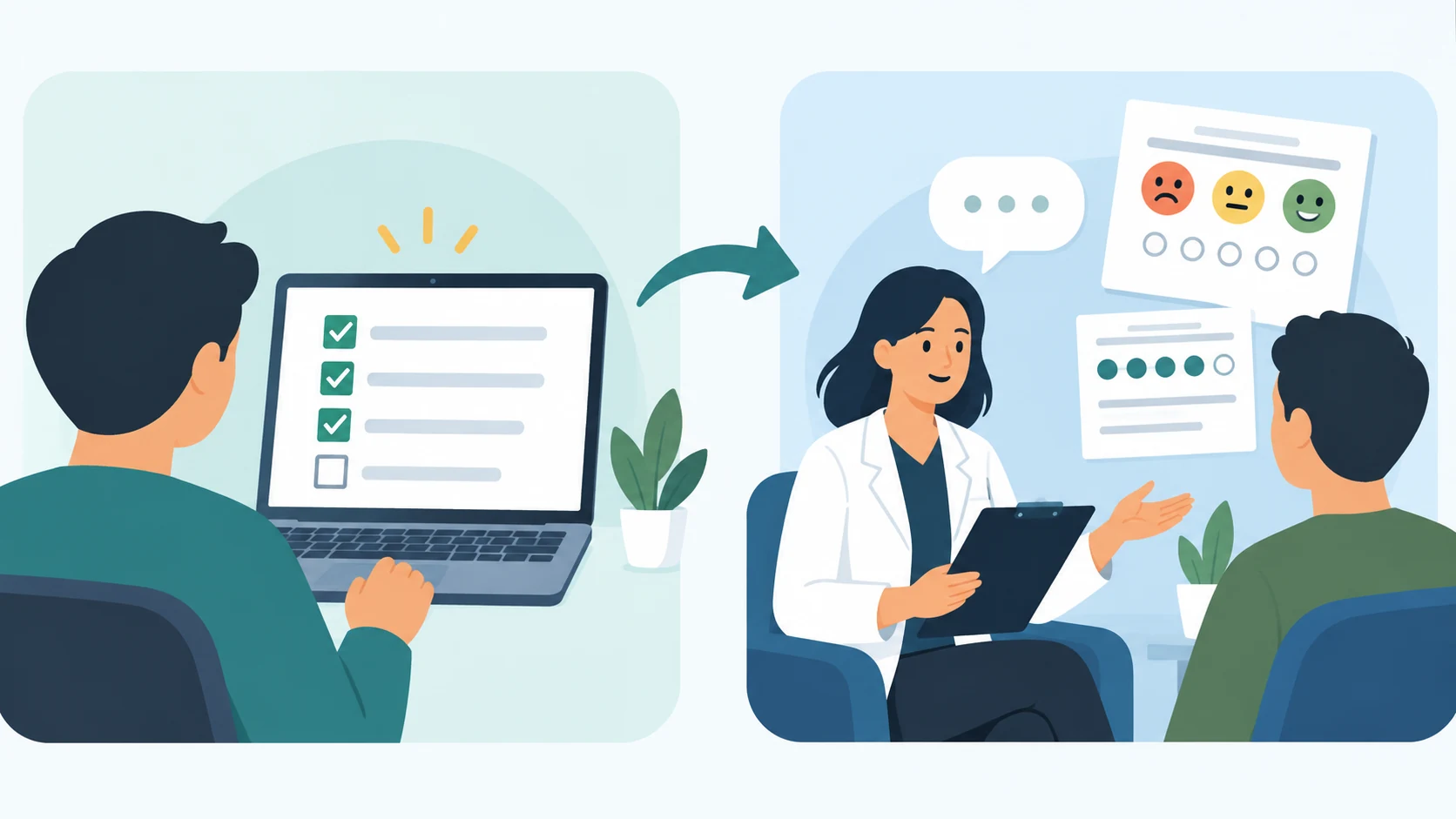
This does not make screening useless. It means screening belongs in the right place. A free ADHD test or online ADHD quiz can help you notice patterns, collect examples, and decide whether a professional conversation would be worthwhile. It should not be treated as a final answer. If you want a low-pressure way to organize your thoughts, the site offers an online ADHD quiz for initial screening that can support reflection before a formal appointment.
Who Can Evaluate Adults for ADHD?
Who can provide an official ADHD evaluation for adults depends on location, insurance, and professional scope, but common options include psychiatrists, psychologists, primary care clinicians with ADHD experience, psychiatric nurse practitioners, neurologists in some cases, and specialized mental health clinicians. Some people begin with a primary care provider because it is the most accessible first step. Others go directly to a mental health professional, especially if symptoms are complex or there are coexisting mood, anxiety, trauma, or substance concerns.
For children and teens, pediatricians, child psychologists, child psychiatrists, developmental-behavioral pediatricians, and school-linked professionals may be involved. A school can help document learning and classroom impact, but families often still need a healthcare or mental health professional for the clinical side of the question.
When choosing a provider, ask what the assessment includes. Useful questions are: Will you use standardized rating scales? Will you review childhood history? Will you screen for sleep, mood, anxiety, learning, and medical issues? Can you provide documentation if accommodations are appropriate? A clear process is more important than a flashy promise.

How to Prepare for an ADHD Evaluation
Preparation can make the appointment more useful. You do not need a perfect life history, but concrete examples help more than general statements. Instead of saying "I cannot focus," write down when focus breaks down, how often it happens, and what the consequence is. Examples might include missed bills, unfinished chores, lost keys, repeated late arrivals, forgotten appointments, school comments, unfinished work tasks, or conflict about interruptions.
Bring a medication list, relevant medical history, sleep concerns, mental health history, and any previous evaluations if you have them. Adults can bring old report cards, work feedback, or notes from family if available. Parents can bring teacher comments, school reports, behavior notes, and examples of homework or classroom difficulty.
It may also help to separate symptoms from coping systems. Many adults with possible ADHD are not obviously disorganized because they rely on alarms, duplicate calendars, piles, reminders, late-night catch-up sessions, or another person doing executive-function support. Those systems are important information. They show the amount of effort required to function.

What to Do With Online ADHD Test Results
Online results are best used as a conversation starter. Save the result summary, note which questions felt strongly familiar, and add real-life examples. If the result suggests ADHD traits, consider whether those traits are new or long-standing, whether they appear in more than one setting, and whether they create meaningful difficulty. If the result does not suggest ADHD but you are still struggling, that also matters. Attention problems can come from many sources, and support may still be appropriate.
Be cautious with any tool that promises certainty or pressures you to act quickly. A good ADHD screener should explain its limits, protect privacy, and encourage professional support when symptoms are impairing. It should help you ask better questions, not replace clinical judgment.
You can also retake a screener later if your situation changes, but repeated quizzes should not become a substitute for care. If symptoms are affecting school, work, relationships, driving, safety, substance use, or mental health, it is worth discussing them with a qualified professional.
A Practical First Step Before Formal Assessment
How do they test for ADHD in real life? They look for patterns, persistence, impairment, history, and context. They ask whether symptoms show up across settings, whether they began earlier in life, and whether another issue could explain them better. For adults, that often means interviews and rating scales. For children and teens, it often means parent, teacher, and youth input. For everyone, it means an official diagnosis should come from a qualified professional.
Before that appointment, you can still take a grounded first step. Use a symptom screener, write down examples, gather records, and notice where daily life is hardest. If you want a calm place to begin, an ADHD quiz that supports self-understanding can help you turn vague concerns into organized notes for your next conversation. Treat the result as information, not a verdict.
FAQ
What is the ADHD test called?
There is no single test with one universal name. Clinicians may use ADHD rating scales, clinical interviews, DSM-based criteria, the Adult ADHD Self-Report Scale, Vanderbilt forms for children, Conners scales, or other tools depending on age and setting.
How do they test for ADHD in adults?
Adult evaluations usually include a clinical interview, symptom rating scales, questions about childhood history, a review of impairment in work or home life, and screening for other issues that can affect attention.
How do they test for ADHD in teens?
Teen evaluations often combine teen input, parent observations, teacher or school information, rating scales, developmental history, and questions about sleep, mood, anxiety, substance use, and school functioning.
How do they test for ADHD in a child?
Child evaluations often include parent and teacher questionnaires, developmental and medical history, school information, and sometimes direct observation. A medical check may help rule out hearing, vision, sleep, or other concerns.
Can a free ADHD test tell me if I have ADHD?
A free online test can point out patterns that may be worth discussing, but it cannot provide an official diagnosis. Use it as a starting point for reflection and conversation.
What are common signs that ADHD may be worth evaluating?
Common signs include persistent inattention, disorganization, forgetfulness, restlessness, impulsive behavior, unfinished tasks, time-management problems, and symptoms that interfere with school, work, home, or relationships.
What does untreated ADHD look like?
Untreated ADHD may look like chronic overwhelm, missed deadlines, academic or work struggles, emotional frustration, relationship conflict, low self-esteem, or repeated efforts to compensate without enough support.