What Causes ADHD in the Brain - Dopamine, Brain Networks, and Development Explained
What causes ADHD in the brain is not one simple flaw, one bad habit, or one missing chemical. ADHD is best understood as a neurodevelopmental condition in which genetics, early development, brain networks, and neurotransmitters can shape attention, impulse control, motivation, and activity level. If you are trying to make sense of your own patterns or a child's behavior, a private ADHD self-reflection tool can help organize observations, but it cannot replace a formal evaluation from a qualified professional. This guide explains the brain-based factors linked with ADHD, why dopamine matters, and why symptoms can look different across children, adults, boys, girls, and families.
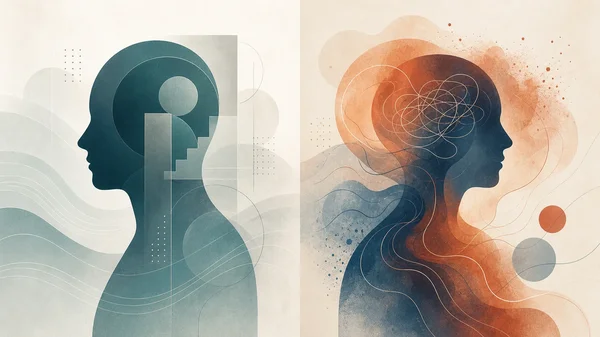
The Short Answer: ADHD Usually Has Several Brain-Based Causes
There is no single main cause that explains every case of ADHD. Research generally points to a mix of inherited risk, differences in brain development, differences in attention and reward networks, and some early-life environmental risk factors. These factors do not work like a light switch. They can increase the chance that a person develops ADHD traits, and the exact pattern may vary from person to person.
The most useful way to think about ADHD is as a regulation difference. Many people with ADHD can pay attention intensely when something is interesting, urgent, new, or personally meaningful. The challenge is often directed attention: choosing, starting, sustaining, and shifting attention when the task is routine, delayed, boring, emotionally loaded, or full of competing distractions.
That is why ADHD can be confusing from the outside. A child may focus on a favorite game for hours but struggle to start homework. An adult may solve a complex work problem under pressure but forget daily admin tasks. These patterns are not proof of laziness or low intelligence. They often reflect how the brain weighs interest, effort, time, and reward.
Genetics and Development Shape ADHD Risk
ADHD often runs in families, which means inherited biology plays a major role. A child with ADHD is more likely to have a biological parent or sibling with similar traits. For adults, recognizing family patterns can be clarifying: a parent may begin to understand their own lifelong organization, restlessness, or attention struggles after noticing similar patterns in a child.
Genes do not create one fixed outcome by themselves. They influence how the nervous system develops and how brain chemicals, receptors, and networks communicate. Environmental factors may also contribute to risk, especially when they affect early brain development. Examples commonly discussed in research include premature birth, low birth weight, early exposure to lead, prenatal alcohol or tobacco exposure, certain early injuries, and other pregnancy or early childhood factors.
This does not mean parents should blame themselves. ADHD is complex, and most families cannot point to one event and say, "That caused it." A better question is: what patterns are showing up now, how much do they affect daily life, and what kind of support would help?
Dopamine and ADHD: Important, But Not the Whole Story
Many searches about what causes ADHD in the brain focus on dopamine. Dopamine is a neurotransmitter involved in reward, motivation, learning from feedback, movement, and goal-directed action. In ADHD, dopamine signaling may be part of why routine tasks can feel unusually hard to start, why immediate rewards can pull attention so strongly, and why novelty or urgency can suddenly unlock focus.
But "low dopamine" is too simple as an explanation. The issue is not that every ADHD brain has the same amount of dopamine missing. Researchers look at dopamine pathways, dopamine transport, receptor activity, timing, and how dopamine interacts with norepinephrine and larger brain networks. Some ADHD medications affect dopamine and norepinephrine signaling, which is one reason these systems receive so much attention. That does not mean dopamine alone is the root cause of ADHD.
A more careful explanation is this: ADHD may involve differences in how motivation and reward signals are processed. A task with a delayed payoff, such as cleaning a room, writing a report, or studying for a future exam, may not generate enough internal pull until the deadline feels close or the task becomes more stimulating. This can create a painful gap between intention and action.

Brain Networks Involved in Attention, Planning, and Self-Control
The brain areas most often discussed in ADHD include the prefrontal cortex, striatum, cerebellum, limbic regions, and the networks that connect them. These areas help with executive functions such as planning, working memory, inhibition, emotional regulation, time awareness, and choosing what to focus on.
The prefrontal cortex is especially important because it helps direct attention, pause before acting, hold a goal in mind, and manage competing priorities. In ADHD, this system may mature differently or communicate less efficiently with reward and movement-related regions. That can make everyday self-management feel inconsistent.
The default mode network also matters. This network is active when the mind wanders, reflects, daydreams, or moves through internal thoughts. For many people, it quiets down when an external task requires focused attention. In ADHD, research suggests that this task-negative network may stay more active during focused work for some people. The lived experience can feel like mental channel-switching: the mind keeps opening side paths even when the person wants to stay with one task.
None of this means the ADHD brain is broken. It means some control systems may require more external structure, interest, feedback, movement, or emotional safety to work reliably.

ADHD Brain vs Non-ADHD Brain: What Is Actually Different
When people search "ADHD brain vs regular brain," they often want a clear contrast. The safest answer is that group-level differences have been found in brain development, structure, activity, connectivity, and neurotransmitter systems, but these differences do not allow someone to identify ADHD from a brain scan alone.
In daily life, the contrast is usually easier to see in regulation patterns:
| Brain function | Common ADHD pattern | What support can do |
|---|---|---|
| Directed attention | Harder to stay with low-interest tasks | Add structure, shorter steps, or immediate feedback |
| Reward sensitivity | Delayed rewards may feel less motivating | Make progress visible and meaningful |
| Working memory | Instructions or intentions may disappear quickly | Use written cues, reminders, and external systems |
| Inhibition | Thoughts, words, or actions may move too fast | Build pause points and reduce avoidable triggers |
| Time awareness | Time may feel abstract until pressure rises | Use timers, calendars, and earlier checkpoints |
This is why a structured ADHD questionnaire can be useful as an observation aid. It helps turn scattered experiences into patterns, especially when someone is deciding whether to discuss attention, impulsivity, restlessness, or executive function concerns with a clinician, therapist, school support team, or primary care provider.
What Causes ADHD in Children, Adults, Babies, and Boys
ADHD begins in development, and symptoms often become noticeable in childhood because school, home routines, peer relationships, and behavioral expectations make attention and self-control demands visible. In children, the question is rarely whether a child ever gets distracted or active. Most children do. The more important questions are whether the pattern is persistent, appears in more than one setting, and interferes with learning, relationships, safety, or everyday functioning.
For adults, ADHD may become clearer when life demands outgrow a person's coping systems. A bright student may manage with urgency and late-night effort, then struggle when work, parenting, finances, relationships, or independent scheduling require more self-directed organization. Adult ADHD is not caused by adulthood; rather, adult responsibilities can reveal patterns that were previously hidden, compensated for, or misunderstood.
For babies and very young children, it is too early to reduce normal variation in temperament, sleep, movement, or attention to ADHD. Very young children develop rapidly, and many behaviors that worry parents can have several explanations. Persistent concerns should be discussed with a pediatric professional rather than treated as proof of ADHD.
Boys are more often identified with ADHD in childhood, partly because hyperactive and impulsive behaviors can be more visible and disruptive. Girls and women may show more inattentive, internalized, or masked patterns, which can delay recognition. The brain-based roots are not simply "boy causes" or "girl causes"; the difference is often in how traits appear, how adults interpret them, and which behaviors trigger concern.

Why ADHD Can Feel Better With Interest, Joy, and the Right Environment
One People Also Ask question is, "What makes ADHD people happy?" That wording is broad, because people with ADHD are not all motivated by the same things. Still, many people with ADHD do better when the environment gives the brain clearer reward, feedback, novelty, autonomy, movement, connection, or purpose.
This does not mean someone with ADHD only wants fun tasks. It means the brain may engage more reliably when the task has enough signal. Useful supports often include visible progress, body doubling, short work cycles, immediate next steps, meaningful rewards, reduced clutter, movement breaks, and compassionate accountability.
Emotional context matters too. Shame and fear can sometimes create short-term urgency, but they often make long-term self-regulation worse. Supportive structure works better when it lowers friction instead of adding blame. A person who understands their brain can ask more precise questions: Do I need a clearer first step? A shorter time block? A different location? A visible checklist? A person nearby? A reward after completion?
What to Do With This Brain-Based Explanation
Understanding what is ADHD caused by in the brain should lead to practical clarity, not self-labeling pressure. If you recognize these patterns in yourself, your child, or someone you support, start by writing down examples across settings: school, work, home, relationships, sleep, emotional regulation, time management, and task completion. Note when the pattern improves as well as when it gets worse.
You can also use an ADHD screening and learning tool as a low-pressure way to reflect on symptoms and prepare better questions. Treat the result as educational information, not a final answer. A qualified professional can consider developmental history, symptom duration, impairment, coexisting conditions, sleep, anxiety, depression, learning differences, substance use, medications, and other possible explanations.
The most helpful next step is often a balanced one: take your concerns seriously without turning one article or one quiz result into a conclusion. ADHD is brain-based, but support is also practical. The goal is not to force the brain to work like someone else's. The goal is to understand the pattern well enough to build safer, kinder, and more effective systems around it.

FAQ
What are the root causes of ADHD?
The root causes of ADHD are usually a combination of inherited risk, neurodevelopmental differences, brain network activity, neurotransmitter signaling, and some early-life environmental risk factors. No single cause explains every person with ADHD.
What is lacking in an ADHD brain?
It is not accurate to say the ADHD brain is simply lacking discipline or intelligence. ADHD may involve differences in dopamine and norepinephrine signaling, executive function networks, reward processing, working memory, inhibition, and attention regulation.
What causes ADHD in the brain dopamine?
Dopamine may affect ADHD by shaping motivation, reward learning, task initiation, and response to delayed rewards. However, dopamine is only one part of the picture. ADHD also involves genetics, brain development, norepinephrine, network connectivity, and environmental risk factors.
What is the main cause of ADHD in children?
There is no single main cause in all children. Genetics are a major factor, and early development can also be influenced by factors such as premature birth, low birth weight, prenatal exposures, lead exposure, and other health or environmental risks.
What causes ADHD in adults?
ADHD in adults usually reflects neurodevelopmental patterns that began earlier in life, even if they were not recognized at the time. Adult responsibilities can make attention, organization, time management, emotional regulation, and impulsivity challenges more visible.
What age does ADHD peak?
ADHD does not have one universal peak age. Hyperactivity may be more visible in childhood for some people, while inattention, restlessness, emotional regulation, and executive function challenges may become more noticeable when school, work, or family demands increase.
Can a brain scan show ADHD?
Brain imaging has helped researchers understand ADHD at a group level, but it is not used as a stand-alone way to identify ADHD in an individual. Formal evaluation relies on symptoms, history, impairment, settings, and ruling out other explanations.