ADHD Assessment for Children - A Parent's Guide to Tools, Forms, and Next Steps
An ADHD assessment for children can feel confusing at first because parents often hear many terms at once: screening, questionnaire, Vanderbilt forms, DSM-5 criteria, school reports, pediatric visits, and private evaluation options. The simplest way to understand the process is this: a good assessment looks for patterns across time, settings, and trusted observers. It is not based on one difficult week, one classroom note, or one online result. If you are early in the process, a calm ADHD self-assessment starting point like an educational ADHD quiz for reflection can help you organize observations before speaking with a pediatrician, psychologist, school support team, or other qualified professional.
What an ADHD Assessment for Children Is Actually Looking For
An assessment for ADHD in children is usually trying to answer several connected questions. Are attention, activity level, or impulse-control concerns present often enough to affect daily life? Do they appear in more than one setting, such as home and school? Did the patterns begin in childhood rather than appearing only after a recent stressor? Are there other explanations that should be considered, such as sleep problems, anxiety, learning differences, vision or hearing concerns, family stress, trauma, or classroom mismatch?
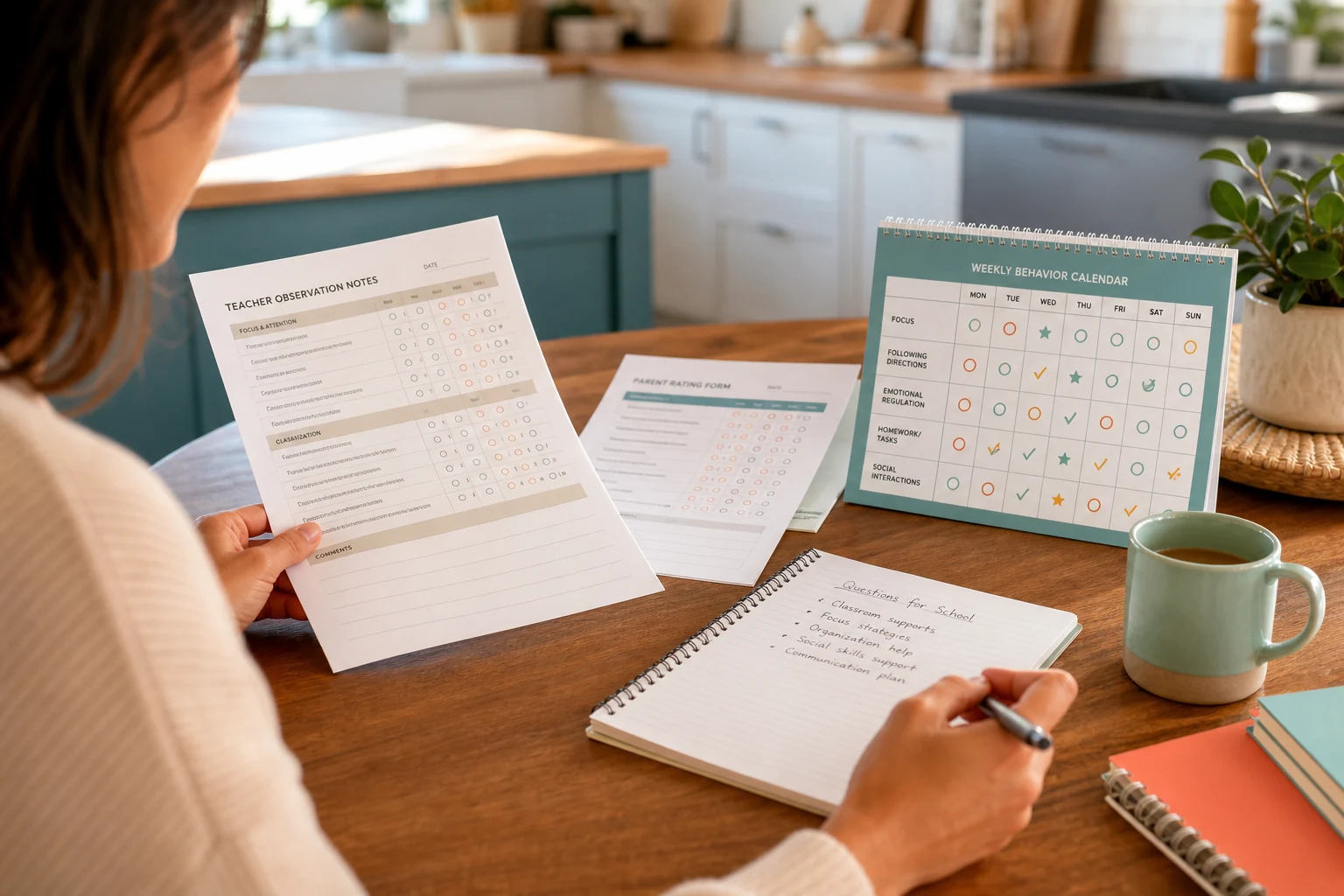
This is why a thoughtful ADHD assessment for children is broader than a single checklist. It often combines parent observations, teacher input, school records, developmental history, behavior rating scales, and a clinical conversation. The goal is to build a balanced picture of the child's functioning instead of reducing the child to a score.
Parents sometimes search for a child ADHD test online free because they want a quick answer. Online tools can be useful for reflection, especially when they explain their limits clearly. Still, they should be treated as a starting point, not a final answer. A child may show ADHD-like traits for many reasons, and the right next step depends on the child's age, impairment, strengths, and context.
Signs That Your Child May Need an ADHD Assessment
A child may benefit from a formal evaluation when concerns are persistent, impairing, and visible across more than one situation. Occasional distractibility, big energy, forgetfulness, or emotional outbursts can be part of typical development. The concern grows when patterns are frequent, last for months, and interfere with learning, friendships, routines, safety, or family life.
Parents often notice patterns such as losing materials, avoiding tasks that require sustained effort, interrupting often, moving constantly, acting before thinking, struggling to finish homework, or needing far more reminders than peers. Teachers may describe inconsistent work completion, difficulty following multi-step instructions, excessive talking, or trouble staying seated. Some children, especially those with mostly inattentive traits, may not seem disruptive. They may look dreamy, overwhelmed, slow to start, or quietly behind.
A helpful parent step is to keep a short observation log for two to three weeks. Note the situation, what happened, how long it lasted, what helped, and whether the same pattern appears elsewhere. This can make a future ADHD assessment for children more concrete and less dependent on memory.
Common ADHD Assessment Tools for Children
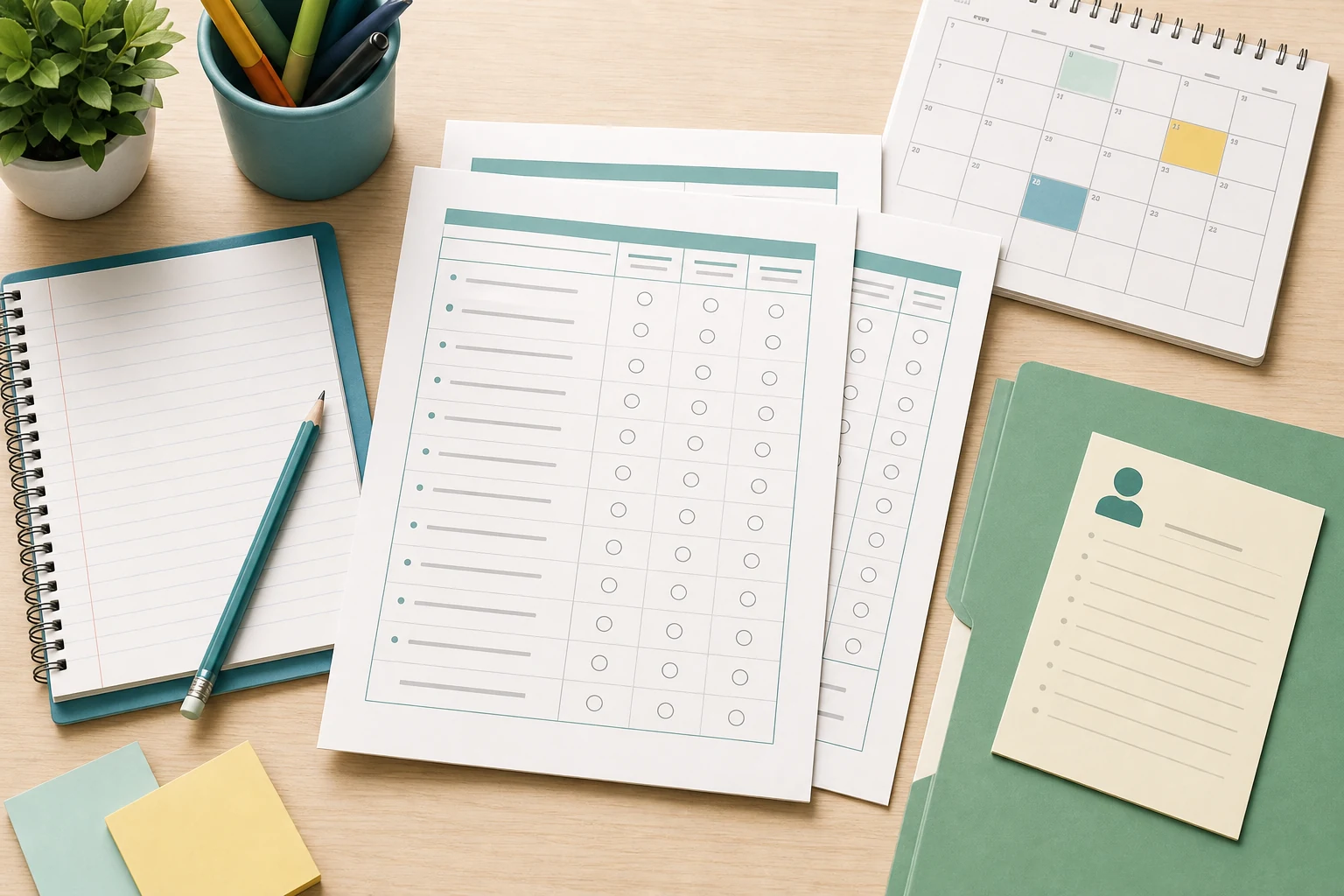
ADHD assessment tools for children are designed to organize observations into consistent categories. They do not replace professional judgment, but they can help parents, teachers, and clinicians compare patterns more clearly.
The Vanderbilt ADHD Assessment is one of the commonly discussed tools in pediatric and school contexts. Families may also hear about Conners rating scales, ADHD checklists, broad behavior questionnaires, or school-based learning and attention forms. A child ADHD questionnaire PDF or ADHD checklist child printable can be useful when it comes from a reputable clinical, school, or healthcare setting and is completed honestly by more than one observer.
Parents should be careful with any form that presents itself as a stand-alone answer. Stronger tools usually ask about frequency, impairment, settings, and related concerns. They may also include questions about anxiety, mood, oppositional behavior, learning, or conduct because ADHD-like symptoms can overlap with other challenges.
If you want to prepare before an appointment, you can use a parent-friendly ADHD quiz as one low-pressure way to think through attention, impulsivity, and activity patterns. Then bring concrete examples, teacher notes, report cards, prior evaluations, and questions to the professional who will review your child's full situation.
How the Evaluation Process Usually Works
The exact process varies by provider, school system, country, insurance plan, and child age, but many ADHD assessments for children follow a similar sequence.
First, parents share the concern. This may begin with a pediatrician, primary care provider, school counselor, psychologist, developmental specialist, or mental health professional. The provider may ask when concerns began, where they appear, how often they happen, and how much they interfere with daily life.
Second, the family gathers information. Parent forms, teacher forms, school records, report cards, learning history, medical history, sleep patterns, and previous reports may all be relevant. If the child is old enough, the child's own description can also matter.
Third, the provider compares the pattern with recognized ADHD criteria and checks whether other factors could be contributing. This may include questions about sleep, anxiety, depression, trauma, seizures, hearing, vision, learning differences, or major life changes. Sometimes a medical visit, educational testing, psychological testing, or neuropsychological assessment is recommended when the picture is complex.
Fourth, the family receives feedback. Good feedback should explain what was found, what remains uncertain, and what supports may help. It may include school accommodations, parent training, classroom strategies, behavior supports, therapy options, medical discussion with a qualified prescriber, or further evaluation.
Public, School, and Private ADHD Assessment Options
Parents searching for private ADHD assessment for children or ADHD assessment for children near me are usually trying to understand where to begin. The right route depends on urgency, cost, insurance, school needs, and the complexity of the child's presentation.
A pediatrician or primary care provider can often be a practical first contact. They may review symptoms, provide rating scales, check medical factors, and refer to specialists when needed. A psychologist may provide a deeper behavioral, emotional, or learning assessment. A developmental pediatrician, child psychiatrist, neurologist, or neuropsychologist may be involved when there are developmental delays, medication questions, complex learning needs, significant anxiety or mood symptoms, or unclear results.
Schools may not provide a medical label, but they can evaluate educational impact and support needs. School-based input is often valuable because ADHD traits frequently show up during sustained attention, transitions, written work, group instruction, and independent tasks. Families can ask about the process for classroom supports, learning evaluations, behavior plans, or formal accommodation pathways.
Private evaluations may offer more time, broader testing, or shorter waits in some areas, but they can be expensive. Before booking, ask what the assessment includes, who completes it, whether teacher input is required, whether a written report is provided, how school recommendations are handled, and whether follow-up guidance is available.

What to Bring to an ADHD Assessment Appointment
Preparation can make the appointment more useful. Bring examples rather than only labels. Instead of saying, "My child never listens," describe what happens: "During homework, my child needs ten reminders to return to the worksheet and often leaves half of it blank." Specific details help the evaluator understand frequency, setting, and impairment.
Useful materials may include completed parent forms, teacher questionnaires, report cards, work samples, school emails, behavior notes, prior therapy or evaluation reports, medication history, sleep notes, and a list of family concerns. If your child has had speech, occupational therapy, tutoring, counseling, or educational testing, bring those reports too.
It can also help to write down your top questions. For example: What information is still missing? Which symptoms are most impairing? Could learning, sleep, anxiety, or sensory issues be involved? What school supports might help while the evaluation continues? What should we monitor over the next few months?
How to Talk With Your Child About the Process
Children often handle assessment better when adults explain it in simple, non-blaming language. You might say that the appointment is a way to understand how their attention, energy, learning, and feelings work, so adults can make school and home feel more manageable. Avoid presenting the evaluation as a punishment or as proof that something is wrong with the child.
For younger children, keep the explanation brief. For older children and teens, invite their perspective. They may know which classes feel hardest, when they lose track of instructions, or what helps them focus. Their voice can add important context, even when parent and teacher observations remain central.
It is also okay to name strengths. Many children with attention difficulties are imaginative, curious, energetic, emotionally intense, or quick to notice interesting details. A balanced assessment should look at challenges and strengths together.
Using an ADHD Assessment for Children as a Next Step, Not a Label
The most useful ADHD assessment for children does not end with a single word. It should help the family understand patterns, plan supports, and decide what to do next. Even when results point toward ADHD, the practical question remains: what helps this child function better at home, school, and in relationships?
Parents can use the process to build a support map. That map may include classroom seating changes, clearer routines, shorter task chunks, movement breaks, visual checklists, parent training, therapy, school meetings, or medical discussion with a qualified professional. It may also include watching for related concerns such as anxiety, learning differences, sleep problems, or emotional regulation struggles.
If you are still gathering observations, an educational ADHD screening experience can help you reflect before choosing your next conversation. Use it gently: as a way to organize notes, not as a verdict on your child. The real value is turning scattered worries into clearer questions, calmer conversations, and better-informed support.
FAQ
What is the best assessment for ADHD in children?
The best assessment is usually a multi-source evaluation rather than one form. It should include parent input, teacher input, developmental history, impairment in daily life, and consideration of other possible explanations. Rating scales such as the Vanderbilt can support the process, but they work best when reviewed by a qualified professional.
How can I get an ADHD assessment for my child?
A practical first step is to contact your child's pediatrician or primary care provider and ask what information they need. You can also speak with the school about classroom concerns and support options. If concerns are complex, you may be referred to a psychologist, developmental pediatrician, child psychiatrist, neurologist, or neuropsychologist.
How do I assess if my child has ADHD?
At home, you can begin by tracking patterns: what happens, where it happens, how often it happens, and what helps. Ask teachers for observations and gather school records. Then share this information with a qualified professional who can compare the full pattern with recognized criteria and consider other explanations.
How do I know if my child needs an ADHD assessment?
Consider an assessment when attention, impulsivity, or activity-level concerns are persistent, impair daily life, and appear in more than one setting. If concerns affect learning, friendships, safety, emotional regulation, or family routines, it is reasonable to ask a pediatrician or school support team what next step fits your child.
Is there an ADHD assessment for children PDF I can use?
Many clinics, schools, and healthcare organizations use printable or PDF rating forms. A PDF can help organize observations, but it should not be treated as a complete answer by itself. Choose forms from reputable sources and share completed results with a professional who can interpret them in context.
Who can make a formal ADHD evaluation decision for my child?
Depending on your location and the child's needs, this may involve a pediatrician, primary care provider, psychologist, child psychiatrist, developmental pediatrician, neurologist, or neuropsychologist. Some professionals can also discuss medication options, while others focus on behavioral, learning, or psychological evaluation.