ADHD Quiz for Women Over 50: Late-Diagnosed Symptoms
Have you spent years, or even decades, feeling like you're secretly struggling to keep up? Many women over 50 are discovering that lifelong challenges with organization, focus, and emotional sensitivity are not personal failings. Instead, they can be signs of undiagnosed Attention-Deficit/Hyperactivity Disorder (ADHD).
For generations, ADHD was overlooked in girls and women. Now, a growing understanding reveals how it presents differently, especially during the significant hormonal shifts of midlife. This guide explores the unique symptoms of ADHD in women over 50 and explains how you can find the clarity you deserve.
Taking a first step toward understanding can feel overwhelming, but it doesn't have to be. A confidential, science-based screening tool can provide valuable initial insights. Our specialized online ADHD quiz is designed to help you explore these possibilities in a safe and private way.

Why ADHD Often Goes Undiagnosed in Women Over 50
For many women, an ADHD diagnosis later in life feels like finding a missing piece of a puzzle they didn't even know they were solving. The reasons for this late discovery are often rooted in a combination of societal expectations and female biology. Historically, ADHD research focused on hyperactive young boys, creating a stereotype that left millions of girls and women unidentified and unsupported.
These women coped by hiding their struggles. It cost them dearly. But midlife hormonal changes make it harder. Once-manageable symptoms now feel overwhelming.
The Masking Phenomenon: How Women Hide ADHD Symptoms for Decades
Masking is a key reason why so many women with ADHD go undiagnosed. It's the subconscious or conscious effort to hide symptoms to fit in and meet expectations. Instead of showing obvious signs of distraction, a woman with ADHD might develop perfectionistic tendencies, spending triple the time on a task to ensure it's flawless.
Common masking behaviors include:
- People-pleasing: Agreeing to everything to avoid rejection or conflict.
- Internalizing struggles: Appearing calm and collected on the outside while experiencing intense inner chaos and anxiety.
- Over-preparation: Creating extensive lists, plans, and scripts for social situations or work projects.
- Mimicking others: Watching how peers behave in social or professional settings and copying them to seem "normal."
While masking can be an effective survival strategy, it is mentally and emotionally exhausting. It can lead to severe burnout and anxiety. Many feel like a persistent imposter, never truly showing the world who they are.
Hormonal Shifts and ADHD: Perimenopause & Menopause Impacts
The connection between hormones and ADHD symptoms is a critical piece of the puzzle for women over 50. Estrogen plays a vital role in regulating neurotransmitters like dopamine. This chemical is closely linked to focus, motivation, and executive function—the very areas affected by ADHD.
Perimenopause and menopause bring fluctuating estrogen levels. This disrupts brain chemicals like dopamine. As a result, ADHD symptoms can worsen or emerge. Old coping tricks often stop working. Many women notice more brain fog, memory slips, clutter, and mood swings. They often blame aging or menopause.

Recognizing ADHD Symptoms in Midlife Women: Beyond Stereotypes
ADHD in adult women rarely looks like the classic image of a child bouncing off the walls. The symptoms are often more subtle, internal, and easily misattributed to stress, anxiety, or personality quirks. Understanding these nuanced presentations is the first step toward recognition and self-compassion.
Instead of disruptive external behavior, many women experience a constant, invisible internal struggle. It’s the mental effort to start a simple task. It’s the frustration of a mind that won't quiet down. It’s the emotional toll of feeling perpetually overwhelmed.
Inattention: Distinguishing ADHD From Normal Age-Related Forgetfulness
While it's normal to become a bit more forgetful with age, the inattention associated with ADHD is a lifelong pattern that feels more pervasive. It's not just about misplacing your keys; it's about misplacing your train of thought in the middle of a sentence.
Signs of inattention in women with ADHD may include:
- Difficulty listening in conversations, often zoning out.
- Struggling to finish projects, even ones they enjoy.
- Chronic disorganization in their home, car, or workspace.
- A tendency to overlook details, leading to careless mistakes.
- Losing track of time, often being late or underestimating how long tasks will take.
This isn't a lack of intelligence or care. It’s a challenge with regulating attention, which can be deeply frustrating and impact self-esteem.
Inner Hyperactivity & Emotional Dysregulation in Older Women
Hyperactivity in women often turns inward. It’s less about running and jumping and more about a mind that is always "on." This inner restlessness can manifest as racing thoughts, a constant need to be busy, difficulty relaxing without feeling guilty, or talking excessively.
Alongside this is emotional dysregulation, a core but often overlooked symptom. This includes:
- Intense mood swings: Feeling happy one moment and deeply discouraged the next, often triggered by small events.
- Rejection Sensitivity Dysphoria (RSD): Experiencing extreme emotional pain in response to perceived criticism or rejection.
- Feeling overwhelmed: Small stressors can quickly become unmanageable, leading to emotional shutdowns or outbursts.
These emotional challenges are frequently misdiagnosed as anxiety, depression, or bipolar disorder, leaving the root cause—ADHD—unaddressed.
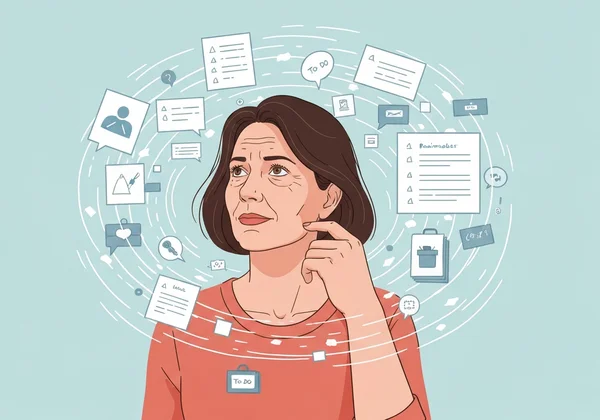
The Lifelong Impact: Career, Family, and Relationship Patterns
Undiagnosed ADHD casts a long shadow over a person's life. In a career, it might look like a history of job-hopping, struggling to meet deadlines despite being brilliant and creative, or feeling chronically underemployed. The constant effort to stay organized and focused can lead to professional burnout.
At home, managing a household can feel like an impossible task, leading to feelings of failure as a partner or parent. In relationships, the symptoms of inattention and emotional dysregulation can cause misunderstandings, with partners feeling ignored or confused by intense emotional reactions. If these patterns sound familiar, it may be time to gain some clarity.
Taking the Female ADHD Quiz Over 50: Your Empowering First Step
Discovering that your lifelong struggles might have a name is a powerful, validating experience. Suddenly, it's not 'What's wrong with me?' anymore—it's 'This is how my brain has always wired itself.' An online quiz is an excellent, low-pressure way to begin this journey of self-discovery.
Our free and confidential quiz is designed specifically to help you identify potential signs of ADHD based on scientifically validated criteria. It’s not about getting a label; it’s about gaining a new lens through which to understand yourself with more compassion and kindness. Take the first step toward understanding your unique mind today.

What Our Online ADHD Quiz Can Tell You About Potential Symptoms
Our quiz is a structured screening tool that walks you through questions related to the core areas of ADHD: inattention, hyperactivity, and impulsivity. The questions are based on established diagnostic criteria, like the DSM-5, but are presented in clear, easy-to-understand language.
By answering questions about your experiences, you can quickly see if your personal patterns align with common ADHD traits. The goal is to provide you with a snapshot—a data-driven starting point that highlights areas of potential concern. This can help you organize your thoughts and decide if seeking a professional opinion is the right next step for you.
Understanding Your Quiz Results: Insights for Discussion, Not Diagnosis
It is essential to understand the purpose of our tool. The results of the ADHD quiz are for informational and screening purposes only. They are not a medical diagnosis. A formal diagnosis can only be made by a qualified healthcare professional, such as a psychiatrist or psychologist, after a comprehensive evaluation.
Think of your quiz results as a conversation starter. They provide a clear, organized summary of your potential symptoms that you can take to your doctor. This can make that first conversation easier and more productive, helping you advocate for yourself and get the support you need.
Your Journey to Understanding Late-Diagnosed ADHD Starts Now
For women over 50, realizing you might have ADHD can be a revelation. It reframes a lifetime of challenges not as failures of character, but as symptoms of a neurotype you never knew you had. This understanding opens the door to self-acceptance, new strategies, and a more compassionate way of living.
Recognizing how ADHD manifests through masking, internal hyperactivity, and hormonal changes is the first step. You are not alone in this experience, and it is never too late to find answers and support.
Ready to see if this fits? Take our free ADHD quiz—it's quick, private, and might just click for you.
Frequently Asked Questions About ADHD in Women Over 50
How can I tell if my symptoms are ADHD or just perimenopause/aging?
There is significant overlap, as both can cause brain fog, memory issues, and mood swings. The key difference is the timeline: ADHD symptoms are part of a lifelong pattern, though they may worsen during perimenopause. Menopause-related cognitive changes tend to have a more recent onset. An ADHD quiz can help you reflect on whether these traits have been present long before hormonal shifts began.
Is it ever too late to be diagnosed with ADHD, especially after 50?
Absolutely not. It is never too late to be diagnosed. Many women find that a late diagnosis is life-changing. It provides an explanation for past struggles, fosters self-compassion, and allows them to access new tools, strategies, and treatments that can dramatically improve their quality of life, relationships, and overall well-being.
What are some common masking behaviors of ADHD in adult women?
Masking behaviors are strategies used to hide ADHD symptoms. Common examples include extreme perfectionism to avoid mistakes, being a "people-pleaser" to avoid rejection, developing anxiety about social situations, meticulously planning and scripting conversations, and appearing quiet and shy to avoid blurting things out.
What steps should I take after getting my ADHD quiz results?
If your results from our ADHD quiz suggest you may have traits consistent with ADHD, a great next step is to schedule an appointment with a healthcare professional. Save or print your results to share with them. Look for a doctor, psychiatrist, or psychologist who has experience with diagnosing adult ADHD, particularly in women. Your results can serve as an excellent starting point for that important conversation.
Can an online quiz truly indicate if I might have ADHD?
An online quiz cannot provide a formal medical diagnosis. However, a well-designed, scientifically-based quiz serves as a highly effective screening tool. It uses established criteria to help you identify patterns of behavior and challenges that are strongly associated with ADHD. It is a reliable first step to determine if a professional evaluation is a worthwhile pursuit.