ADHD or Depression Quiz: Identify Overlapping Symptoms Accurately
Feeling stuck in a fog of distraction, low motivation, and emotional ups and downs? You might be asking yourself a difficult question: Is this ADHD, depression, or both? The confusion is real, and you are not alone. Many people find it hard to tell the difference because the symptoms can look surprisingly similar from the outside.
Distinguishing between ADHD and depression is a critical step toward finding the right support and feeling like yourself again. Understanding the root cause of your challenges can unlock effective strategies for managing your daily life. Let’s cut through the confusion together. Below, we’ll break down the key differences between ADHD and depression in plain language.
Your journey to understanding begins here. We’ll provide the information you need, and when you’re ready, our free quiz can offer personalized initial insights based on your unique experiences.

ADHD vs. Depression: Similar Symptoms, Different Causes
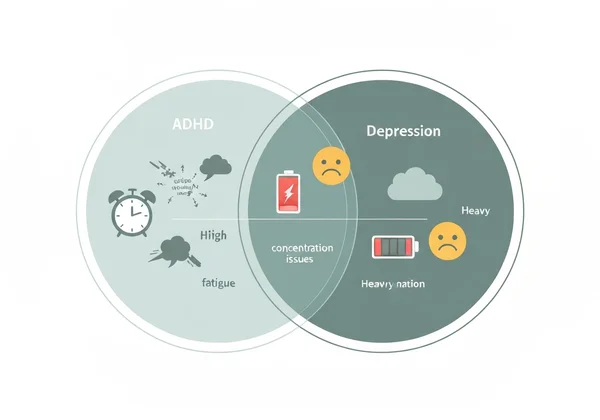
ADHD (Attention-Deficit/Hyperactivity Disorder) and depression are two distinct conditions, but they often share symptoms, making self-assessment tricky. This overlap can lead to misinterpretation, where one condition masks the other. Gaining a clear picture starts with understanding the specific signs of each.
Common Emotional ADHD Symptoms Often Mistaken for Depression
ADHD isn’t just about focus or hyperactivity. Its emotional toll—like rejection sensitivity or chronic frustration—is often mistaken for depression.
For example, many people with ADHD experience Rejection Sensitive Dysphoria (RSD), an intense emotional pain triggered by perceived criticism or rejection. This can look like the persistent sadness of depression. Other common ADHD-related emotional signs include chronic frustration from not meeting goals, feelings of inadequacy from constant comparison to others, and a sense of being overwhelmed that leads to shutdown—all of which can mimic depressive episodes.
Core Symptoms of Depression: More Than Just Sadness
Depression is more than just feeling sad for a few days. It is a persistent mood disorder that affects how you feel, think, and handle daily activities. The core symptoms often last for weeks or months and represent a significant change from your usual self.
Key signs of depression include:
- Persistent low mood: A feeling of sadness, emptiness, or hopelessness that doesn't go away.
- Loss of interest or pleasure: A lack of interest in hobbies and activities you once enjoyed (a state known as anhedonia).
- Significant fatigue: Feeling tired all the time, even with enough sleep.
- Changes in sleep or appetite: Sleeping too much or too little, or eating more or less than usual.
- Feelings of worthlessness or guilt: Harshly criticizing yourself for faults or mistakes.
These symptoms can sometimes overlap with challenges seen in adults with attention issues. If you're an adult wondering about your focus, our ADHD in adults quiz can provide more specific insights.
The ADHD-Depression Comorbidity Connection
It's very common for ADHD and depression to occur together, a condition known as comorbidity. Undiagnosed ADHD often creates daily struggles at work, school, or home. Over time, these challenges can wear down your self-esteem. For many, this strain becomes a trigger for depression. Recognizing this link is crucial, as treating only the depression may not solve the underlying issues caused by ADHD.
Key Differences: ADHD vs. Depression Explained
While the symptoms can seem tangled, there are core differences in why they happen and how they feel. Understanding these distinctions can help you start to unravel your own experiences. The key is often in the timing, consistency, and underlying motivation behind a behavior.
Distinguishing Between Impulsivity & Restlessness vs. Psychomotor Agitation
Both conditions can make it hard to sit still, but the feeling behind the movement is different.
In ADHD, restlessness is often a lifelong trait. It might manifest as fidgeting, tapping your feet, or feeling an internal "engine" that won't turn off. This restlessness can sometimes be productive, helping you focus or burn off excess energy. Impulsivity is a core feature, leading to quick decisions without thinking through the consequences.
In depression, the physical agitation (called psychomotor agitation) is typically linked to anxiety and internal distress. It's often non-productive, like pacing aimlessly or wringing your hands. It feels like an anxious, nervous energy rather than a need for stimulation.
Focus Issues: ADHD Inattention vs. Depression-Related Concentration Difficulties
Trouble concentrating is a hallmark symptom of both conditions, but its nature differs.
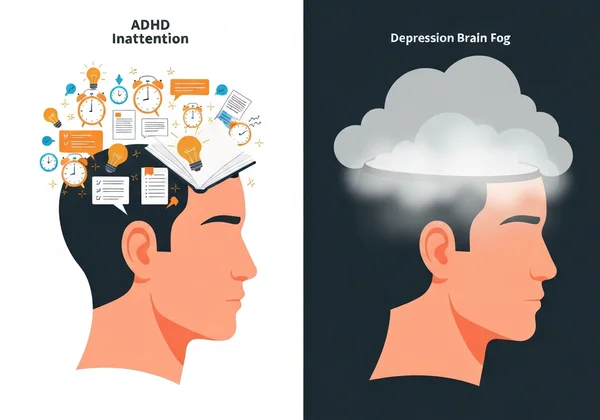
With ADHD, difficulty with focus is chronic and has likely been present since childhood. An ADHD brain struggles to regulate attention; it might wander off during boring tasks but can "hyperfocus" intensely on topics of great interest. The challenge is directing focus where it needs to go, not a complete lack of it.
With depression, concentration problems are often tied to low energy, a lack of motivation, and overwhelming negative thoughts. It feels more like a heavy "brain fog" that makes thinking and focusing on anything feel exhausting. Unlike ADHD, this difficulty in concentration usually develops with the depressive episode and improves as the depression lifts.
The Role of Emotional Dysregulation in ADHD vs. Mood Swings in Depression
Both conditions involve emotional challenges, but the patterns are distinct.
ADHD is characterized by emotional dysregulation, meaning people feel emotions very intensely and have trouble managing their reactions. These emotional responses are often powerful but short-lived, typically triggered by a specific event. An individual might feel intense anger or despair in one moment and be fine an hour later once the trigger is gone.
Depression, on the other hand, involves a sustained, persistent mood. The low mood is less a reaction to specific events and more of a constant state that can last for weeks or even months. While there might be moments of feeling better, the underlying feeling of sadness or emptiness generally remains.
How Our Quiz Helps: A First Step Towards Clarity
Navigating these overlapping symptoms on your own can be overwhelming. While only a qualified professional can provide a diagnosis, a well-designed screening tool can be an invaluable first step. It helps you organize your thoughts and identify specific patterns to discuss with a doctor.
What Our "ADHD & Depression Quiz" Assesses
Our clinically-designed ADHD screening tool is specifically designed to screen for the core traits of ADHD as defined by established psychiatric standards, such as the DSM-5. Our questions cover key areas of inattention, hyperactivity, and impulsivity across different life situations.
While it is not a depression test, by helping you identify potential ADHD characteristics, it provides crucial context for your mood-related symptoms. Understanding if an underlying attentional challenge exists can help you and your doctor explore whether your feelings of sadness or frustration might be linked to the daily struggles of ADHD. To see where you stand, take the quiz today.
Interpreting Your Results: Initial Insights, Not a Diagnosis
It is essential to approach your results with the right mindset. The outcome of our quiz is not a medical diagnosis. Instead, think of it as a personalized, preliminary insight—a starting point for a more informed conversation.
Your quiz results spotlight ADHD traits you might recognize. Use this snapshot to start a more focused talk with your doctor. This report empowers you to take a proactive, educated step toward seeking professional evaluation and finding the support you deserve.
Beyond the Quiz: Your Next Steps Towards Relief
If you’re wrestling with ADHD-like symptoms and low mood, take a breath. Our quiz helps you spot patterns so you can approach your doctor with confidence.
You've already taken an important step by seeking information. The next is to gain personalized insight into your own experiences. Taking a self-assessment can provide the clarity needed to move forward with confidence.
Ready to understand yourself better? Start your ADHD quiz for free, and use your results as a guide for your conversation with a healthcare professional.
Disclaimer: This article is for informational purposes only and does not constitute medical advice. The online quiz at Adhdquiz.net is a screening tool and is not a substitute for a professional diagnosis. Please consult with a qualified healthcare provider for any health concerns or before making any decisions related to your health or treatment.
Frequently Asked Questions About ADHD & Depression Quizzes
Do I have ADHD or Depression? How can a quiz help?
Only a healthcare professional can diagnose you. However, an online screening quiz can be a very helpful first step. It can identify patterns in your behavior that align with ADHD traits. This gives you a clear and structured way to understand your symptoms and provides a solid starting point for a discussion with a doctor.
How do I know if my child has ADHD symptoms or is just sad?
Observing your child's behavior across different settings is key. ADHD symptoms are typically persistent and appear at both home and school, affecting their ability to learn and socialize. Sadness may be more situational. A child ADHD quiz, completed with a parent's observations, can help you spot these patterns before speaking with a pediatrician or child psychologist.
Can an online ADHD quiz tell the difference between ADHD and anxiety?
Our quiz is specifically designed to screen for the core symptoms of ADHD. While some symptoms, like restlessness and trouble concentrating, can overlap with anxiety, the quiz focuses on the lifelong patterns of inattention, hyperactivity, and impulsivity that define ADHD. Highlighting these traits can help you and your doctor better differentiate between the conditions.
What should I do after taking an ADHD and depression quiz?
Use your results as a tool for empowerment. If the quiz indicates you may have traits associated with ADHD, the best next step is to schedule an appointment with a healthcare professional. Share your results with them to facilitate a productive conversation about a full evaluation and appropriate support options.
Am I masking ADHD symptoms, or is it a sign of depression?
Masking involves actively trying to hide ADHD symptoms to fit in, which can be mentally exhausting and lead to feelings of burnout and low self-esteem that look like depression. Depression, however, is a persistent low mood. Taking a quiz can help you identify if the underlying traits you are trying to hide are consistent with ADHD. Gaining this insight can be a relief and a crucial step toward finding better coping strategies. Find out more on our site.